Quick answer: For your first apartment you need a bed with a frame and mattress, a way to sit and eat, basic kitchen equipment for actual cooking, bathroom essentials, cleaning supplies, and a toolkit with a hammer, screwdriver, and level. You do not need most of what apartment decor accounts on social media suggest you need. The average American moving into their first apartment spends between $3,000 and $5,000 on furnishing and setup according to surveys by moving and personal finance platforms, but a functional, comfortable first apartment can be established for significantly less if you separate the genuinely essential from the aspirationally nice. This guide does that separation for you.
The defining feature of a first apartment is that it teaches you what you actually need by showing you what you reach for. In six months you will know things about yourself as a person who runs a household that you cannot know in advance from any list, including this one. So the philosophy here is to start lean, live in the space, and add things as you discover you need them. The one exception is safety. The things that protect you get bought before anything aesthetic.
What do you need before you move in?
Before a single piece of furniture arrives, three things need to happen. Change the locks or ask your landlord to rekey them, because you have no way of knowing how many copies of the previous tenant's key are floating around. Photograph every room thoroughly with the date stamp on, and send those photos to your landlord in writing, because those photos are your deposit protection when you leave. Read your lease. Not a summary of it. The actual lease, specifically the sections on what requires written permission, who is responsible for what maintenance, the notice period required to leave, and what is and is not allowed. These are the things that cost people money when they are discovered after the fact rather than before.
Then, and only then, think about furniture.
What furniture do you actually need for a first apartment?
A bed with a proper frame and a mattress you can sleep on comfortably is not optional. This is the one item worth spending real money on because you spend a third of your life there and the quality of your sleep affects everything else. A mattress on the floor works in a temporary emergency and is not a good long-term plan — floor-level mattresses are harder to make, harder to get in and out of, and accumulate humidity from floor-level air in ways that damage the mattress faster.
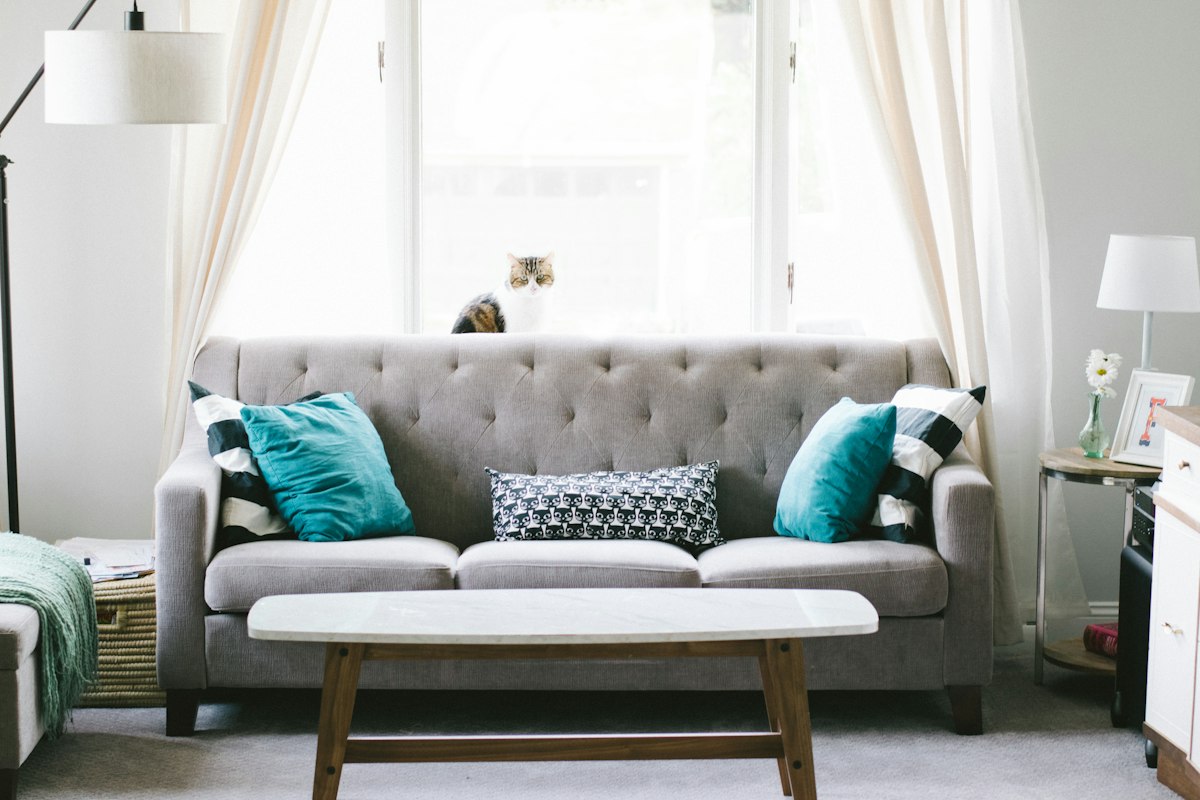
After the bed: a couch or equivalent seating for the living area, a table and chairs for eating (even a small folding table works), and a dresser or closet organizer for clothes. That is the essential furniture list for a first apartment. Everything else — coffee tables, accent chairs, bookshelves, TV stands, decorative storage — can wait until you have lived in the space and know what you actually want where.
The most common expensive mistake in first apartment furnishing is buying furniture before you know how the space actually functions. A sectional that looked perfect on the store floor and blocks your front door is a regret. A dining table that seats six in a kitchen that barely fits four is a regret. Measure everything twice, including doorways and hallways, before buying anything large.
What do you need in the kitchen?
This is the category where most first-apartment guides fail their readers, because they either list almost nothing ("just get a pan") or everything including specialty items that most people use twice and store forever.
The actual cooking essentials for a first kitchen: one large pot for pasta and soups, one medium saucepan, one large skillet or frying pan, a sheet pan for roasting, a cutting board that is larger than you think you need, one good chef's knife, a can opener, measuring cups and spoons, a wooden spoon and a spatula, a colander, and an oven mitt. A kettle if you drink tea or coffee. That is a kitchen that can cook everything most people cook.
The refrigerator and freezer basics to stock on day one: cooking oil, salt, pepper, a few pantry staples you actually cook with, and enough food for the first two or three days before you establish your grocery routine. The kitchen organizes itself gradually based on what you actually cook. Do not buy seventeen spices on day one.
Dishes and glasses: four of each is enough for one person. Eight if you have people over regularly. Anything more occupies storage you probably do not have.
What do you genuinely need in the bathroom?
The bathroom list is short: a shower curtain and liner if the shower needs one, rings to hang it, a bath mat, towels, a toilet brush, basic cleaning supplies, and a toilet plunger. The plunger is the one item that can wait until it is needed and must absolutely not wait until it is needed. Buy the plunger.
What tools does a first apartment renter need?
A small toolkit prevents a surprisingly large category of problems and expenses. For a first apartment: a hammer, a standard and Phillips head screwdriver or a multi-bit version, a level for hanging things straight, a tape measure, picture hanging hardware, command strips for things you do not want to put holes in, and a flashlight or a phone with a working torch. An adjustable wrench covers most plumbing moments that do not require a professional.
Everything else in the tool category can be borrowed from a neighbor, parent, or hardware store tool rental when the specific need arises.
What are the admin tasks most first-time renters miss?
These are the tasks with the longest lead times and the most expensive consequences if missed. Set up renter's insurance before or immediately after move-in. It typically costs between $15 and $30 per month and covers your belongings in the event of theft, fire, or water damage. Your landlord's insurance covers the building structure only — your laptop, your furniture, and your clothing are not covered unless you have your own policy.
Update your address with the postal service, your bank, your employer, your insurance providers, and any government accounts that hold your address. Address changes have a way of feeling less urgent than they are and then causing months of delayed correspondence. Do them within the first week.
Set up your utilities in your name if they are not already included in your rent: electricity, gas, internet, and water where applicable. Confirm billing start dates to avoid paying for a period you did not occupy.
Find your building's main water shutoff and your apartment's circuit breaker before you need them. Finding either of these for the first time during an actual emergency is considerably more stressful than knowing where they are in advance.
What can you skip entirely in a first apartment?
More than you might expect. You do not need a dining set that seats more people than you regularly feed. You do not need matching everything — a first apartment is supposed to look like someone is living and learning there, not like a showroom. You do not need expensive art on the walls before you know what the walls should hold.
The category most worth skipping in a first apartment is premature storage solutions. When you move into a new space, you do not yet know what your actual storage problems are, and buying organizational solutions in advance almost always means buying the wrong ones. Spend three months living in the space before you buy a single shelf or drawer organizer. By then you will know exactly what you need and where.
Start lean and let the rest follow
A first apartment is the beginning of learning how to run your life in a space that is entirely yours. That knowledge does not come from a perfect list of supplies. It comes from making the space work, figuring out what is missing, and adjusting. Start with the essentials. Let the rest follow you in as you need it.